
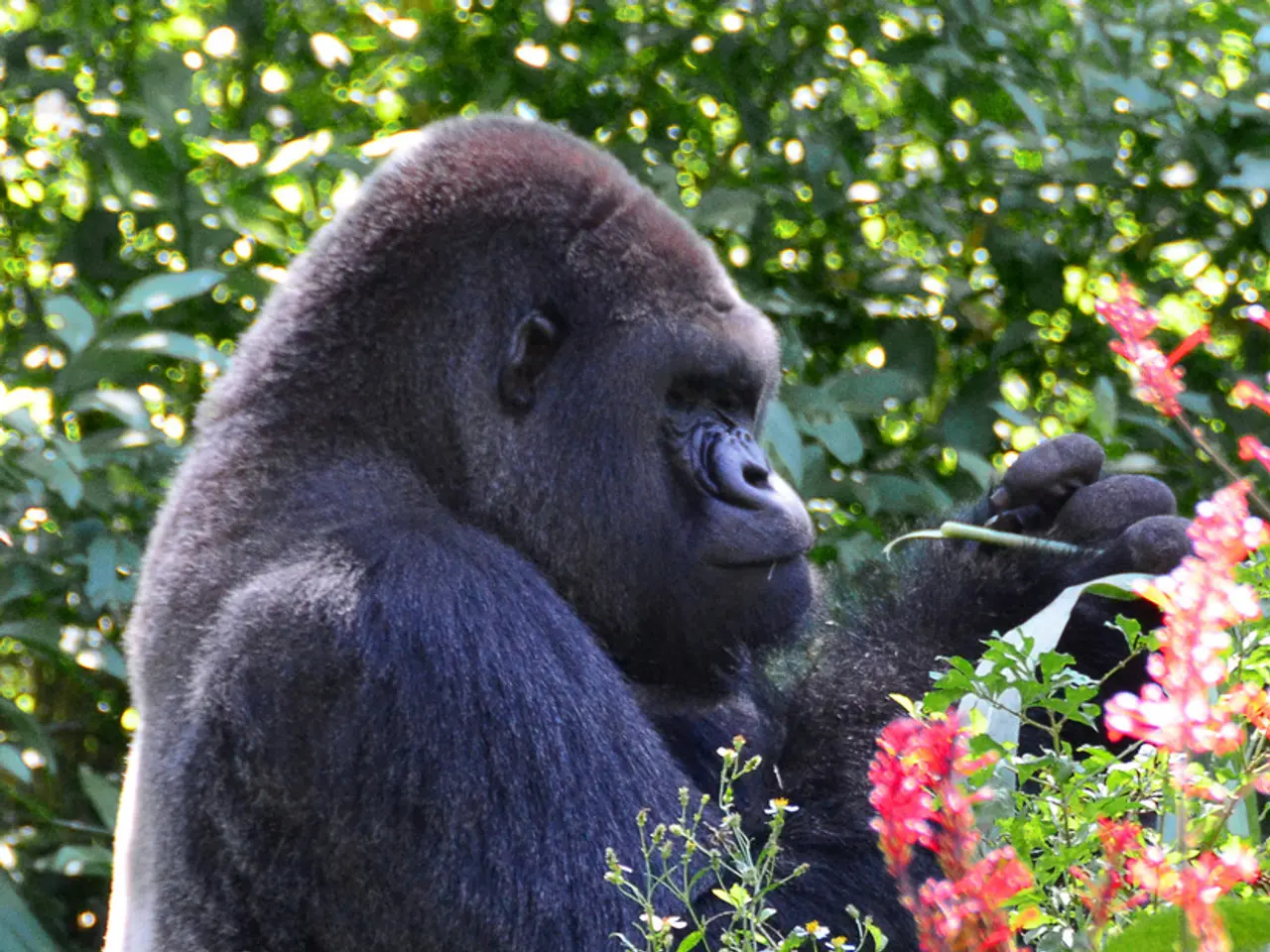
Perilous Living of Gorillas on the Brink of Extinction
In the heart of Central and East Africa, the future of four subspecies of silverback gorilla hangs in the balance. Poaching, habitat loss, and disease outbreaks threaten these magnificent creatures, with all four subspecies listed as endangered or critically endangered by the International Union for Conservation of Nature (IUCN).
The Eastern Gorilla, comprising the Mountain Gorilla and the Eastern Lowland Gorilla, faces an alarming decline. The Mountain Gorilla, once thought to be on the brink of extinction, has shown signs of a miraculous resurgence, with roughly 1,000 individuals spotted in a recent count. However, the Eastern Lowland Gorilla faces a more dire situation, with fewer than 6,800 individuals remaining.
The Western Gorilla, on the other hand, consists of the Western Lowland Gorilla and the Cross River Gorilla. The Western Lowland Gorilla, with an estimated population of 150,000-250,000 individuals, is more abundant, but the Cross River Gorilla, with just 200-300 individuals, is one of the world's most endangered primates.
Habitat destruction due to deforestation, mining activities, and agricultural expansion is a major threat to silverback gorilla populations. This habitat loss disrupts silverback gorilla foraging grounds and fragments their communities, making it more challenging for them to find adequate food and maintain healthy social structures.
The illegal wildlife trade targets silverback gorillas for bushmeat, pet trade, and entertainment industry, causing significant losses to their populations. Disease outbreaks, often linked to human interaction, pose a threat as well, particularly the spread of illnesses like Ebola.
Organisations such as the World Wildlife Fund (WWF), the Dian Fossey Gorilla Fund, and the African Wildlife Foundation play pivotal roles in protecting silverback gorillas. They focus on habitat protection, anti-poaching efforts, and community engagement to preserve silverback gorilla populations. The Jane Goodall Institute, famous for its work with chimpanzees, also extends its dedication to silverback gorilla conservation through community-based programs that reduce poaching and habitat destruction while promoting sustainable livelihoods.
The future of silverback gorillas is a reflection of our commitment to preserving the intricate web of existence that sustains us. They call upon us to protect their world - a world that is ultimately our shared heritage. As Dian Fossey, a renowned primatologist, once stated, "When you realize the value of all life, you dwell less on what is past and concentrate more on the preservation of the future."
This article was originally published on October 4, 2023. The active organisations involved in the conservation of the endangered Eastern Gorilla and Western Gorilla species include these international wildlife conservation groups and regional national parks and wildlife authorities in the silverback gorillas' native habitats. Let us unite in our efforts to ensure the survival of these incredible creatures and the preservation of their habitats.
Read also:
- Regional University's healthcare system strengthened through collaborative partnership with Chancellor Dr Fiona Hill
- Reminisced University Trustee David M. Flaum as a 'fervent advocate' for the University and community
- Two-year-old boy Awaab's tragic demise due to mold sparks change in Britain's housing legislation, Awaab's Law.
- Guidance for Osteoarthritis Patients: Objectives and Strategies