
Crafty Activities Boosting Finger Dexterity with a Roald Dahl Twist
A new collection of fine motor skill activities has been curated, drawing inspiration from the imaginative world of Roald Dahl. These activities combine the magic of Dahl's stories with developmentally appropriate exercises designed to foster creativity and skill growth.
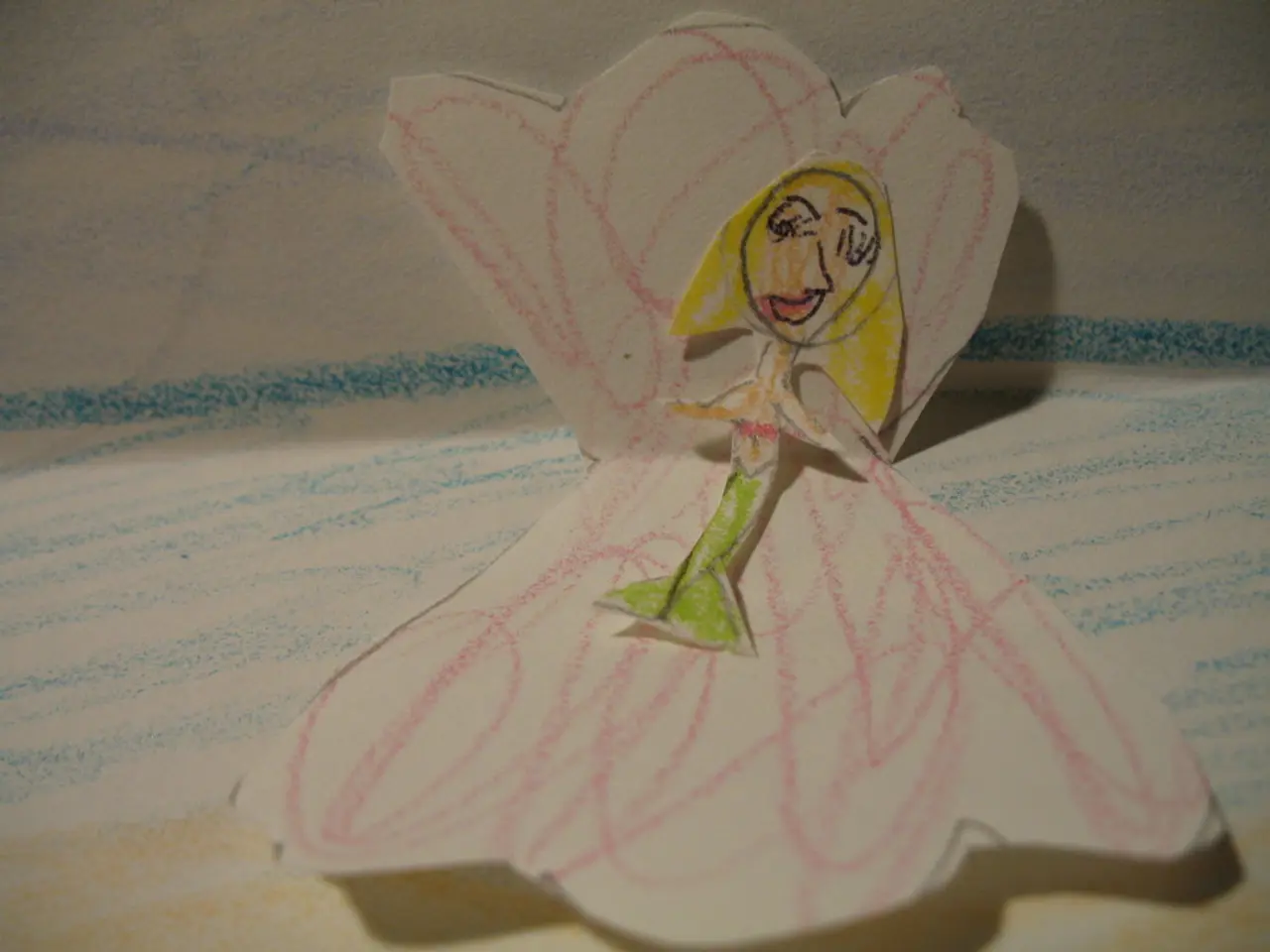
One such activity is scissor cutting activities with Dahl themes. Children can cut out paper shapes, characters, or illustrations from Dahl books, such as the BFG's dreams or Matilda's books. This creative cutting task not only builds fine motor skills and hand-eye coordination but also encourages focus and concentration.
Another engaging activity is creating shape collages based on Dahl characters or scenes. Using colored paper cut into shapes, children can glue these pieces to form images or characters from Dahl’s stories, like a caterpillar-shaped collage representing the “Caterpillar” character in *James and the Giant Peach*. This activity promotes scissor skills, gluing, and shape recognition alongside fine motor control.
Crafts focusing on letters or characters offer another opportunity for skill development. For example, craft activities themed on the letter “C” (like "C is for Chicken") can be adapted for Dahl-related words (e.g., “G is for Golden Ticket” from *Charlie and the Chocolate Factory*). This combines cutting, coloring, and assembling crafts to strengthen fine motor skills while enhancing literacy.
Container play inspired by Dahl’s imaginative worlds also plays a significant role in these activities. Using small containers, children can scoop, pour, and transfer objects themed around Dahl's books—like “magic beans” or “Fizzy Lifting Drinks” ingredients—to develop the pincer grasp, hand strength, and coordination. Manipulating lids and lids-on-lids also enhances dexterity and problem-solving related to opening and closing actions.
Fine motor storytelling crafts, such as building small tactile models or dioramas of scenes like the chocolate factory, are another engaging way to strengthen fine motor skills. Assembling tiny objects or gluing components carefully requires dexterity and hand control.
The Willy Wonka Inspired Sensory Tray, for instance, uses colored rice made by pouring uncooked rice into a ziploc bag, adding food coloring, mixing, and allowing it to dry. Younger children can move pom poms to the same color rice or count the pom poms as they remove them. Older children can create words with labeled wrapped sweets after using tweezers to remove them from the rice.
Other unique activities include the Mrs Twit Sensory Gel Bag, which is made using cheap blue hair gel inside a sealable sandwich bag. Ten spiders are added to the bag, and the edges are covered with masking tape to prevent leaking. This activity helps children practice number bonds to 10 by moving the spiders around and putting different numbers on each side.
Additionally, an Enormous Crocodile Lacing Card is being made with a shoelace, and Mr Twit's Wormy Spaghetti is similar to the rice sensory tray but uses coloured spaghetti with bugs in it.
Using play dough can also improve fine motor skills by requiring pushing, pulling, stretching, and rolling. Play dough was used to make chocolates as part of a Willy Wonka themed activity, and LEGO was used in a one-handed tree race activity.
These Roald Dahl-inspired fine motor skill activities offer a fun and engaging way for children to develop essential skills while immersing themselves in the rich literary world of Roald Dahl. The favourite book mentioned in this collection is *Revolting Rhymes*. The article was last updated on July 16, 2025, by Emma Vanstone.
- Engaging in the activity of creating science experiment setups themed around Dahl's peculiar elements, such as dream jars or quantum quaffer drinks, helps children build fine motor skills through measuring, pouring, and mixing ingredients.
- Fashion-and-beauty enthusiasts can learn embroidery techniques by stitching intricate designs inspired by Dahl's iconic characters or story themes, such as a heart-shaped stitch representation of the Beatrix Potter-inspired Mrs. Fox from *Esio Trot*.
- Food-and-drink activities led by aspiring young chefs can involve caterpillar-themed party cakes or whip-up-a-storm cocktails for a James and the Giant Peach themed celebration, fostering both fine motor skills and creativity in culinary arts.
- Home-and-garden projects that mimic the surreal design aesthetic of Dahl's stories can help children practice hand-eye coordination, as they craft quirky planter boxes or dollhouse interiors inspired by his unique settings.
- In the realm of education-and-self-development, children can follow engaging learning journals or activity books focused on a broad spectrum of topics, such as math, writing, or crafting—but with a Dahl-inspired twist to stimulate imagination and reinforce essential learning skills in a fun way.


